
Long-distance RV travel exposes small setup problems repeatedly. A weak sensor battery, unreadable camera angle or missing offline manual may be only an inconvenience at home, but it can cost hours on a multi-state trip. A technology check before departure keeps the equipment simple once the road gets busy.
Why 2026 is a major road-trip year
The RV Industry Association continues to track a large and diverse RV market, while 2026 travel interest has been shaped by national celebrations and the Route 66 centennial. Popular corridors and campgrounds can increase the value of arriving prepared and setting up efficiently.
Tires: establish the baseline
- Check cold pressure with a reliable gauge and follow the correct load guidance.
- Inspect tread, sidewalls, valve stems and the spare.
- Confirm every TPMS sensor reports in the correct wheel position.
- Pack spare sensor batteries and know how to silence and diagnose an alarm.
- Save roadside-assistance information where it is available offline.
Rear visibility: test the complete rig
Clean the lens and monitor, verify the camera angle with the RV loaded, and test the wireless link with the engine and normal accessories operating. Practice interpreting distance in an open lot before using the view in a crowded fuel station or campground.
Leveling: calibrate before the first stop
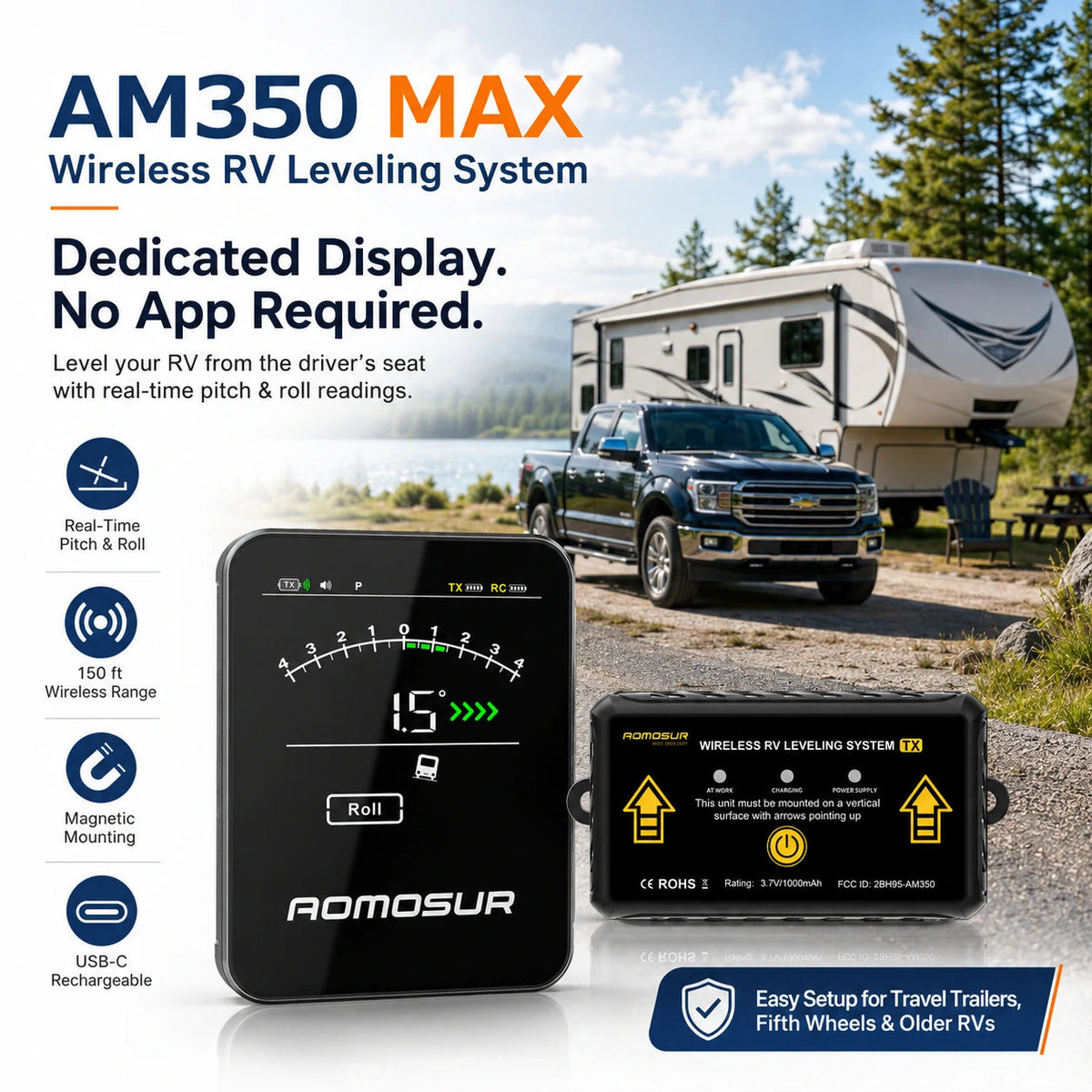
Confirm the sensor mount, recalibrate on a known level surface and pack rated blocks and chocks. Save the relevant manual or app instructions offline. A digital level speeds decisions, but stable ground and correct support placement still determine the quality of the setup.
Power and connectivity
- Charge removable cameras, displays and backup power banks.
- Pack the correct cables, fuses and adapters in labeled bags.
- Update apps and download manuals before leaving reliable internet.
- Write down critical settings so a reset does not stop the trip.
- Carry a basic analog fallback: pressure gauge, bubble level and flashlight.
The final ten-minute test
Turn every system on together. Walk around the full rig while another person watches the display. Trigger a safe sensor test where supported. Confirm that equipment does not block mirrors, vents or the driver’s view. Then store the checklist for the next departure.
Download AOMOSUR manuals and apps from Support.