
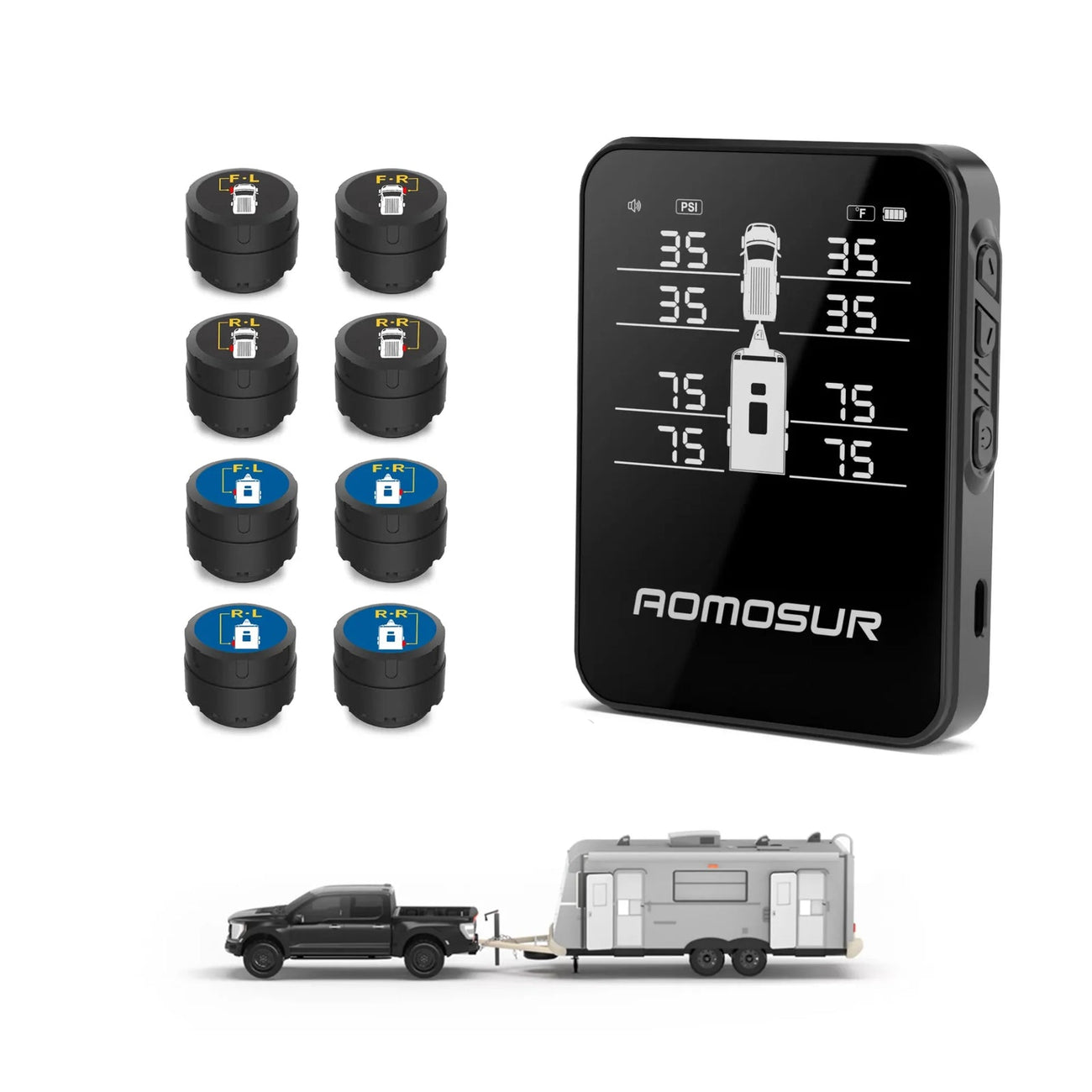
An RV tire pressure monitoring system adds a live layer of information between walk-around inspections. External sensors report pressure—and on many systems, temperature—to a display or phone so a driver can respond to a developing problem before it becomes an obvious handling issue.
What an RV TPMS can and cannot do
A direct TPMS watches each fitted wheel and warns when readings cross configured thresholds. It can reveal a slow leak, rapid pressure loss or unusual heat. It does not replace checking tread, sidewalls, valve stems, wheel fasteners or load limits.
NHTSA TireWise recommends checking all tires, including the spare, at least monthly when cold. It also notes that a pressure warning does not replace regular manual checks. RV owners should follow the RV, tire and wheel manufacturers’ specified limits.
Pressure changes after you start driving
Tire pressure normally rises as a tire warms. That is why cold inflation pressure is the baseline. Do not automatically bleed air from a warm tire simply because the displayed pressure is higher than the cold setting. Instead, look for a tire that behaves differently from the others or crosses a properly configured high-pressure or high-temperature alarm.
How to set useful alarm thresholds
- Start with the vehicle placard, owner’s manual and tire manufacturer guidance—not the maximum molded on the sidewall alone.
- Set the system’s baseline and units before fitting all sensors.
- Configure low, high and temperature alarms according to the equipment instructions.
- Drive a short test route and verify every sensor reports consistently.
- Recheck after rotating tires, changing wheels or adjusting the load.
Sensor and display setup tips
- Label sensor positions so wheel locations remain clear after maintenance.
- Keep spare sensor batteries and the installation tool in the RV.
- Mount the display where it is readable without blocking the road view.
- Confirm signal reception with the exact trailer length and tow vehicle used.
- Treat a sudden alarm as a reason to slow smoothly and find a safe inspection location.
Build a complete tire routine
The strongest routine combines cold-pressure checks, visual inspection, load awareness and live monitoring. A TPMS is valuable because it continues watching once the trip begins, when a hand gauge cannot.
Explore AOMOSUR tire monitoring systems or download product instructions from Support.