
No checklist can guarantee that a tire problem will never happen, but a consistent inspection routine can catch many preventable issues. The best checklist is short enough to use before every departure and specific enough that two people will perform it the same way.
The night-before inspection
- Read every sidewall. Look for cracks, cuts, bulges, exposed material and objects embedded in the tread.
- Check tread and wear pattern. Uneven wear can point to alignment, suspension, inflation or load problems.
- Review age and service history. Use the tire manufacturer’s inspection and replacement guidance.
- Verify load. Confirm actual axle and tire loads remain within vehicle, wheel and tire ratings.
- Inspect valve stems and extensions. Flexible extensions and loose hardware deserve special attention.
The cold-pressure check
NHTSA recommends checking tire pressure when tires are cold and using the specified pressure from the vehicle label or owner’s manual. For an RV, also consult the tire maker’s load-and-inflation information and the RV manufacturer’s guidance.
Use a known, accurate gauge. Check every road tire and the spare. Record the result if your rig is used seasonally; a simple log makes slow leaks easier to identify.
The departure walk-around
- Confirm wheel chocks, blocks, jacks and stabilizers are fully stowed.
- Check hitch, safety chains, breakaway cable and electrical connector.
- Test brake lights, turn signals and marker lights.
- Verify cargo, doors, steps, awnings and antennas are secured.
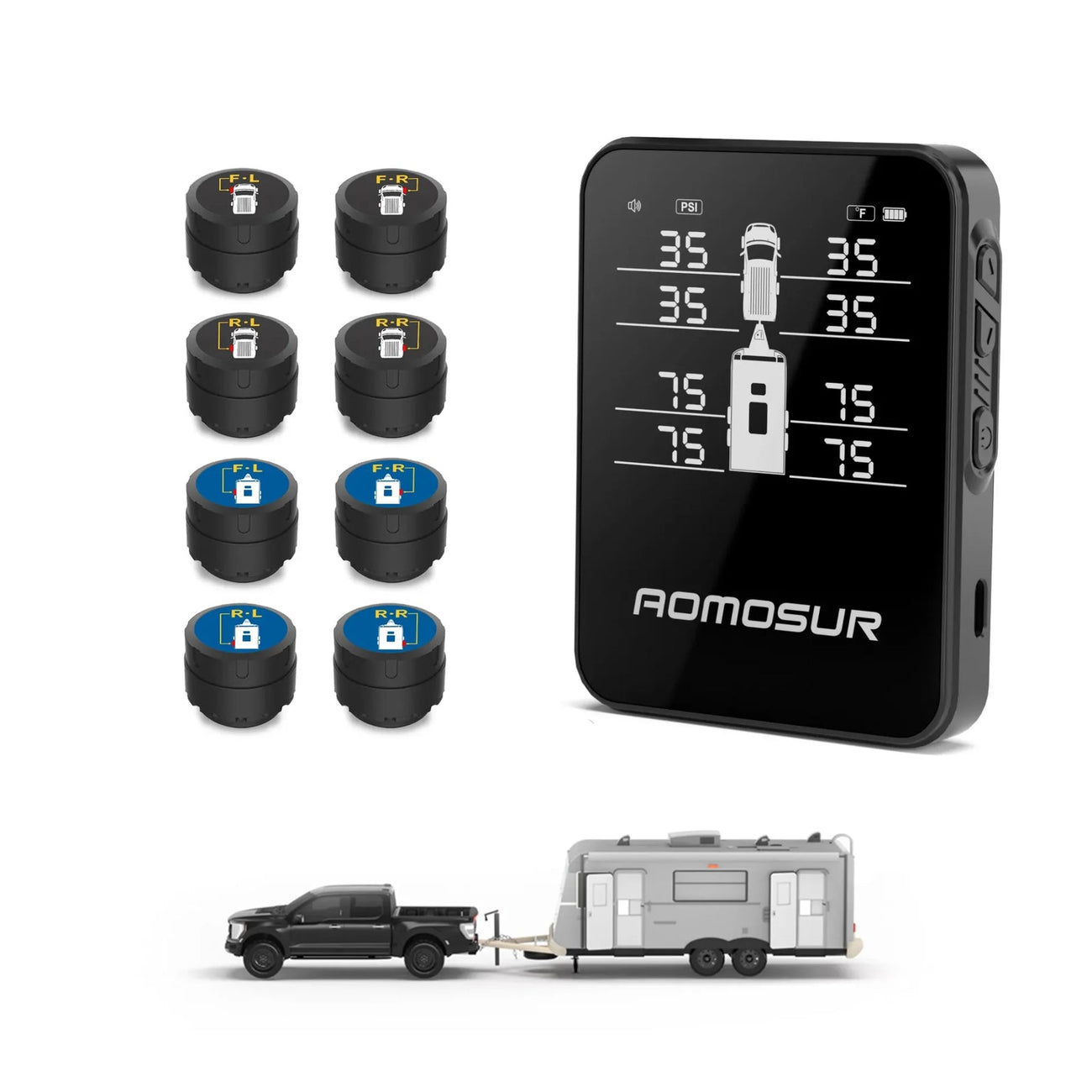
- Power on the TPMS and confirm every fitted sensor reports.
If an alarm occurs on the road
Stay calm, avoid abrupt steering or braking, reduce speed smoothly and move to a safe location away from traffic. The correct response depends on the vehicle and situation, so follow the driver and equipment manuals. Do not inspect a roadside tire where traffic exposure creates a greater hazard.
Make the routine easy to repeat
Store the gauge, flashlight, gloves and spare sensor batteries together. Put the checklist near the driver’s seat. A two-minute routine performed every time is more protective than a perfect inspection performed only once a season.
Add live monitoring with the AM100 RV TPMS.