
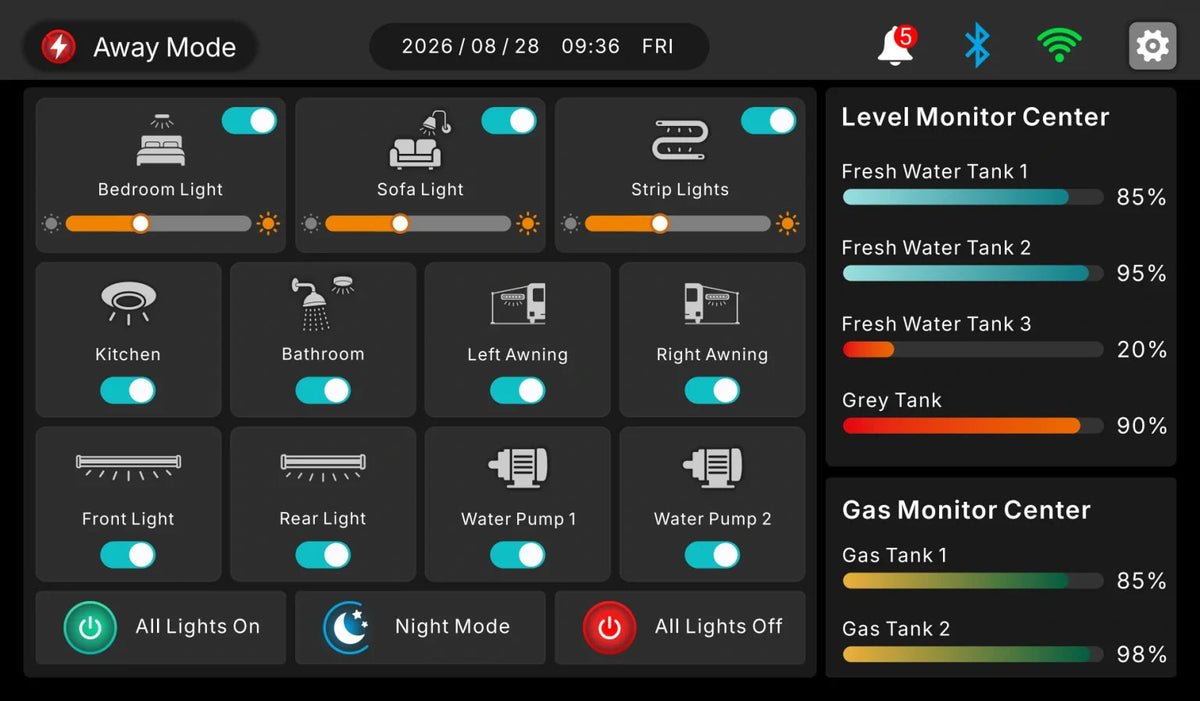
The most useful RV technology is becoming less about adding screens and more about removing friction. Owners want safer towing, faster setup and information that is easy to interpret. Dealers and manufacturers want modular systems that install consistently and are simple to support.
RV travel remains a large, active market
RV Industry Association research reported that 37 million Americans planned to RV during summer 2026, with flexibility and control over travel costs among the leading motivations. A broad customer base means electronics must work for first-time renters, experienced owners and commercial fleets—not only technology enthusiasts.
Trend 1: data that leads to a decision
A useful display does not simply show numbers. It makes an abnormal tire, unsafe angle or camera status clear at a glance. Expect more emphasis on readable color, configurable alarms and interfaces that work without a long learning curve.
Trend 2: faster, lower-impact installation
Magnetic mounts, wireless links and rechargeable power reduce drilling and cable routing. That matters to owners protecting resale value and to dealers trying to control installation time. The tradeoff is that removable equipment needs a disciplined attachment, charging and storage routine.
Trend 3: modular systems instead of one closed panel
Different RV classes need different combinations of leveling, tire monitoring, rear visibility, switch control and environmental data. Modular hardware allows a manufacturer or fleet to standardize the interface while selecting only the functions required for each floor plan.
Trend 4: phone optional, not phone mandatory
Apps remain convenient for configuration and personal rigs, while dedicated displays remain important for rentals, fleets and shared vehicles. The market is moving toward choice: phone-first, display-first or hybrid operation depending on the task.
Trend 5: safety systems that complement good habits
Cameras, TPMS and wireless levels improve awareness, but they work best alongside mirror checks, tire inspections, chocking and proper loading. The product should make a good process easier rather than encourage the operator to skip it.
What buyers should prioritize in 2026
- A clear use case before adding features.
- Installation that matches the exact RV structure and operating environment.
- Reliable manuals, replacement parts and support.
- Readable alarms and sensible default settings.
- A test routine that confirms the complete system before travel.
See the full AOMOSUR product range for current leveling, camera and tire-monitoring options.